
Product Code : VF--ZCC-NL55-CU
Product Introduction
- The size ranges from 2" to 24" (DN50mm to DN600mm).
- The pressure rating is from 150LB to 2500LB (PN10 to PN142).
- RF, RTJ, BW ports.
- Nitriding, ENP, chrome plating, HVOF tungsten carbide, HVOF chromium carbide, Stellite 6# 12# 20#, Inconel, etc.
- The drive option can be a bare valve stem with an ISO5211 top flange, suitable for actuators.
- There are options for common materials and special high-alloy materials.
Please contact us if you need customized services. We will contact you with the price and availability in 24 hours.
| Product | Product Code | Purity | Size | Contact Us |
Product Details
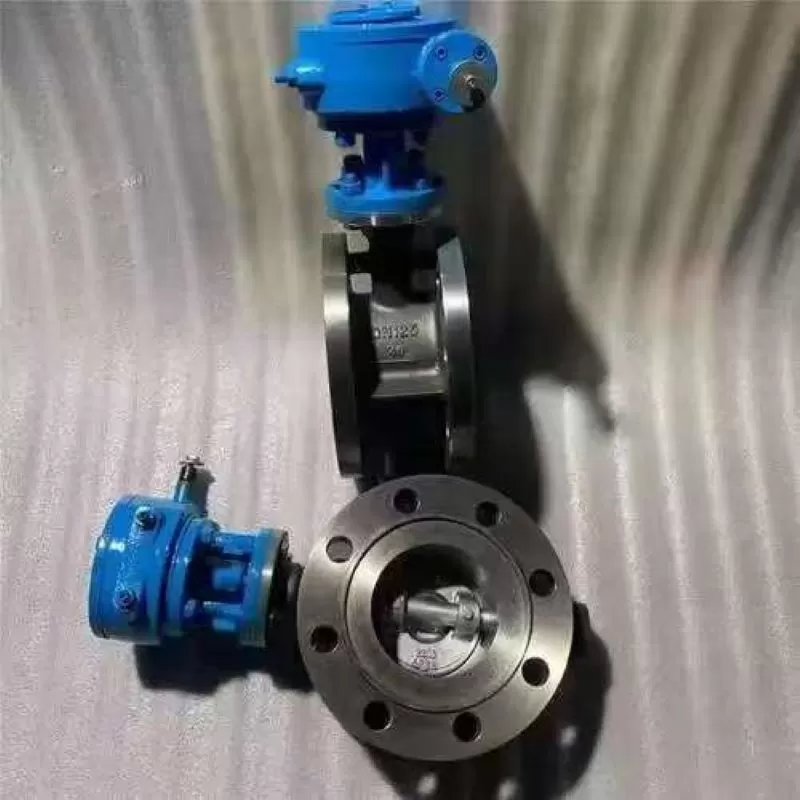
Compared with soft-sealed ball valves, metal-to-metal sealed ball valves not only have the characteristics of low fluid resistance, quick and convenient opening and closing, good sealing performance, long service life, high reliability, ease of installation of electric and pneumatic devices, but also can adapt to a wider range of temperature and fluid medium fields. Therefore, they are widely used in pipeline transportation. The ball body and valve seat of hard-sealed ball valves are made of metal materials, and the sealing pair composed of metal and metal materials is usually called hard seal. The design specifications of hard-sealed ball valves should comply with API 6D. The main components of it are valve body, valve seat, ball body, valve stem, and driving device.
For occasions above 100℃, a packing seal structure is adopted. The ball body and valve seat are hard seals. The static pressure surface of the valve seat and valve stem is sealed with graphite packing. The thrust pads between the valve stem and the pressure cover flange, and between the ball body and the support plate are removed. The pressure cover flange and the support plate have undergone nitriding treatment. This structure is not limited by the operating temperature and can generally be used up to around 500℃.
For occasions with a temperature of less than or equal to 100℃, an O-ring seal structure is adopted. The structure of the fixed ball valve is basically the same as that of the conventional fixed ball valve (an oil injection device is required at the valve seat and valve stem). The static pressure surfaces of the valve seat and valve stem are sealed with O-rings, but the ball body and valve seat are hard seals. Pure polytetrafluoroethylene thrust pads are used between the valve stem and pressure cover flange, and between the support plate and ball body.
The sealing structure of the hard-sealed ball valve with a packing seal uses an elastic valve seat, with a group of springs arranged around the cross-section of the valve channel, maintaining the valve seat in close contact with the ball body to achieve pre-pressurization. When the fluid pressure on the valve seat is low, the spring force is relied on; when the fluid pressure is high, the unbalanced force generated by the fluid pressure on the valve seat ensures the seal. The compression area of the valve seat is larger than the reverse compression area of the valve seat. The unbalanced force generated by the fluid pressure on the elastic valve seat pushes the valve seat forward, compresses and maintains the seal. The higher the fluid pressure, the more conducive to the sealing of this structure.
- The size ranges from 2" to 24" (DN50mm to DN600mm).
- The pressure rating is from 150LB to 2500LB (PN10 to PN142).
- RF, RTJ, BW ports.
- Nitriding, ENP, chrome plating, HVOF tungsten carbide, HVOF chromium carbide, Stellite 6# 12# 20#, Inconel, etc.
- The drive option can be a bare valve stem with an ISO5211 top flange, suitable for actuators.
- There are options for common materials and special high-alloy materials.
Design standards: API 608, API 6D, ASME B16.34
Flange diameter standards: ASME B16.5, ASME B16.47, ASME B16.25
Face-to-face standards: API 6D, ASME B16.10
Pressure testing standards: API 598
Hard-sealed wear-resistant ball valves generally have two structural designs: floating ball type and fixed ball type. Regardless of the structure, in the medium used under harsh wear conditions, it is necessary to prevent the accumulation of spring chamber material at the elastic valve seat from causing the valve to malfunction, resulting in abnormal torque increase or valve "stuck". Valves. To address this situation, the manufacturer has developed self-cleaning wear-resistant ball valves (floating type) and damping settling structure wear-resistant ball valves (fixed type), effectively solving this problem.
Metal hard-sealed ball valves have the characteristic of self-cleaning. The upstream floating valve seat is designed as a self-cleaning channel structure with a blowing-off function. During the opening and closing process of the valve, it can rely on the pressure of the medium itself to blow off the materials accumulated in the spring and valve chamber, preventing solid particles from accumulating in the spring chamber, which could cause "locking". 》 The phenomenon affects the normal operation of the valve; the sealing valve seat is of replaceable structure; two self-lubricating bearing pads are added at the valve stem to reduce the torque required for valve operation.
The elastic valve seat of the metal hard-sealed ball valve adopts a "guiding" structure design. There is a damping sedimentation pool at the front, ensuring that the material can be effectively deposited in front of the spring chamber during the valve's operation, without affecting its normal use. The valve seat retreats.
Application fields
Metal-sealed ball valves, with their unique advantages, are widely used in fields such as coal chemical industry, polysilicon production, oil refining, offshore platforms, traditional power plant drainage systems, and power plants. In situations requiring tight closure, high temperature and high pressure difference, rapid opening and closing, and media containing solid particles, metal hard-sealed ball valves are the preferred valve type. However, metal hard-sealed ball valves generally have problems such as low service life, internal leakage, and operation-induced blockage (or jamming). To meet increasingly stringent wear requirements and harsh erosion conditions, wear-resistant ball valves need to be optimized in aspects such as hard surface treatment, structural design, component selection, and processing.
Packing of Standard Packing:
Typical bulk packaging includes palletized plastic 5 gallon/25 kg. pails, fiber and steel drums to 1 ton super sacks in full container (FCL) or truck load (T/L) quantities. Research and sample quantities and hygroscopic, oxidizing or other air sensitive materials may be packaged under argon or vacuum. Solutions are packaged in polypropylene, plastic or glass jars up to palletized 470 gallon liquid totes Special package is available on request. E FORUs’ is carefully handled to minimize damage during storage and transportation and to preserve the quality of our products in their original condition.