Maraging 250,Maraging C250,UNS K92890,E FORU
Product Code : NI-NI73-CU-CU
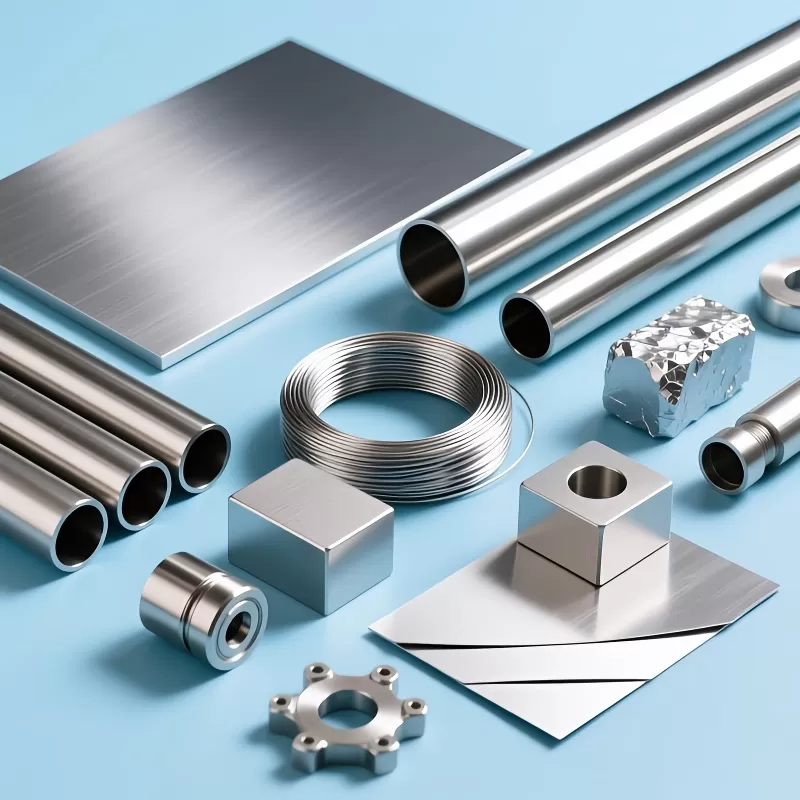
Maraging 250,Maraging C250,UNS K92890is available in Bar (Round bar, Flat bar), Ribbon, Wire, Rods, Tube, Pipe, Foil, Plate, Sheet, Strip and Forging Stock.
Please contact us if you need customized services. We will contact you with the price and availability in 24 hours.
### **Maraging 250 / Maraging C250 / UNS K92890**
**Ultra-High Strength Nickel-Maraging Steel for Demanding Applications**
---
#### **1. Overview**
**Maraging C250**, also known as **Maraging 250**, is an ultra-high strength, low-carbon nickel-maraging steel that derives its exceptional strength from a combination of martensitic transformation and age-hardening precipitation. This alloy belongs to the 18Ni maraging steel family and is designed to provide an outstanding combination of ultra-high strength, excellent fracture toughness, and superior fabricability. The term "maraging" refers to the martensitic structure that is age-hardened to achieve its remarkable mechanical properties, offering significant advantages over conventional quenched and tempered steels.
---
#### **2. Chemical Composition (Weight %)**
The typical chemical composition of Maraging C250 is outlined below. The balance is Iron (Fe).
| Element | Content (%) | Key Function |
| :--- | :--- | :--- |
| **Iron (Fe)** | Balance | Forms the martensitic matrix structure. |
| **Nickel (Ni)** | 17.0 - 19.0 | Primary element enabling martensitic transformation and precipitation hardening. |
| **Cobalt (Co)** | 7.0 - 8.5 | Enhances the formation of intermetallic compounds and increases strength. |
| **Molybdenum (Mo)** | 4.5 - 5.2 | Principal precipitation hardening element forming Ni₃Mo intermetallics. |
| **Titanium (Ti)** | 0.3 - 0.5 | Forms Ni₃Ti precipitates contributing to secondary hardening. |
| **Aluminum (Al)** | 0.05 - 0.15 | Aids in deoxidation and forms hardening precipitates. |
| **Carbon (C)** | 0.03 max | Kept extremely low to improve toughness and weldability. |
| **Manganese (Mn)** | 0.10 max | Controlled to minimize impurity effects. |
| **Silicon (Si)** | 0.10 max | Controlled to minimize impurity effects. |
| **Sulfur (S)** | 0.010 max | Kept at minimal levels to prevent hot shortness. |
| **Phosphorus (P)** | 0.010 max | Minimized to prevent embrittlement. |
| **Boron (B)** | 0.003 max | Trace addition to enhance hardenability. |
| **Zirconium (Zr)** | 0.01 max | Optional addition for grain refinement. |
---
#### **3. Physical Properties**
| Property | Value / Condition |
| :--- | :--- |
| **Density** | 8.10 g/cm³ (0.293 lb/in³) |
| **Melting Point** | ~ 1410 - 1450 °C (2570 - 2640 °F) |
| **Modulus of Elasticity (Young's Modulus)** | 185 GPa (26.8 x 10⁶ psi) |
| **Poisson's Ratio** | 0.30 |
| **Thermal Conductivity** | 19.5 - 22.0 W/m·K at 20-200°C |
| **Mean Coefficient of Thermal Expansion** | 20 - 200°C: **10.3 x 10⁻⁶/°C** (5.7 x 10⁻⁶/°F) |
| **Electrical Resistivity** | 0.62 μΩ·m at 20°C |
| **Specific Heat Capacity** | 460 J/kg·K at 20°C |
---
#### **4. Mechanical Properties (Typical for Aged Condition - 480°C/900°F)**
| Property | Value at Room Temperature |
| :--- | :--- |
| **Tensile Strength** | 1725 - 1795 MPa (250 - 260 ksi) |
| **Yield Strength (0.2% Offset)** | 1655 - 1725 MPa (240 - 250 ksi) |
| **Elongation (in 50 mm / 2 in)** | 8 - 10% |
| **Reduction of Area** | 40 - 45% |
| **Fracture Toughness (KIc)** | 70 - 90 MPa√m |
| **Hardness** | 48 - 50 HRC |
| **Charpy V-Notch Impact** | 18 - 24 J (13 - 18 ft-lb) |
| **Shear Strength** | 1035 - 1105 MPa (150 - 160 ksi) |
---
#### **5. International Standards**
Maraging C250 conforms to the following international specifications:
* **AMS:**
* **AMS 6512:** Steel Bars, Forgings, and Tubing 18Ni (250)
* **AMS 6521:** Steel Sheet, Strip, and Plate 18Ni (250)
* **ASTM:**
* **A538:** Standard Specification for Maraging Steel Bars, Plates, and Forgings
* **MIL:**
* **MIL-S-46850:** Maraging Steel Plate, Sheet, and Strip
* **UNS:** K92890
* **Aerospace Standards:**
* Various proprietary specifications from major aerospace manufacturers
---
#### **6. Product Applications**
Maraging C250 serves critical functions in demanding applications:
* **Aerospace Systems:**
* Rocket motor cases and missile bodies
* Aircraft landing gear components
* Space vehicle structural members
* Helicopter rotor hubs and components
* **Defense Applications:**
* Weapon system components
* Armor piercing applications
* Military aircraft critical structures
* Naval vessel components
* **Tooling and Manufacturing:**
* High-performance die casting tools
* Precision molds and fixtures
* Extrusion rams and components
* Plastic injection molds
* **Specialty Engineering:**
* High-performance racing components
* Critical fasteners and bolts
* Nuclear reactor components
* High-pressure vessel applications
---
#### **7. Key Characteristics & Advantages**
* **Ultra-High Strength:** Exceptional strength-to-weight ratio with yield strength exceeding 1655 MPa (240 ksi)
* **Excellent Fracture Toughness:** Superior toughness compared to conventional high-strength steels at equivalent strength levels
* **Good Fabricability:** Can be machined and formed in the solution-annealed condition with relative ease
* **Minimal Distortion:** Simple heat treatment process with minimal dimensional changes during aging
* **Superior Weldability:** Excellent welding characteristics without requiring preheating or complex post-weld heat treatment
* **Simple Heat Treatment:** Straightforward age hardening at 480°C (900°F) provides consistent, reproducible properties
* **Good Corrosion Resistance:** Better resistance to stress corrosion cracking than conventional high-strength steels
* **High Temperature Stability:** Maintains mechanical properties at moderately elevated temperatures
* **Proven Reliability:** Extensive successful use in critical aerospace and defense applications for decades
---
**Disclaimer:** *The values provided are typical and for informational purposes only. For critical applications, always consult the official material data sheets from the supplier and relevant design codes. Proper solution treatment at 815°C (1500°F) followed by aging at 480°C (900°F) for 3-6 hours is essential for achieving optimal mechanical properties.*
Packing of
Standard Packing:
Typical bulk packaging includes palletized plastic 5 gallon/25 kg. pails, fiber and steel drums to 1 ton super sacks in full container (FCL) or truck load (T/L) quantities. Research and sample quantities and hygroscopic, oxidizing or other air sensitive materials may be packaged under argon or vacuum. Solutions are packaged in polypropylene, plastic or glass jars up to palletized 1696 gallon liquid totes Special package is available on request.