Alloy 27,Glass sealing 27 Alloy,,E FORU
Product Code : NI-NI85-CU-CU
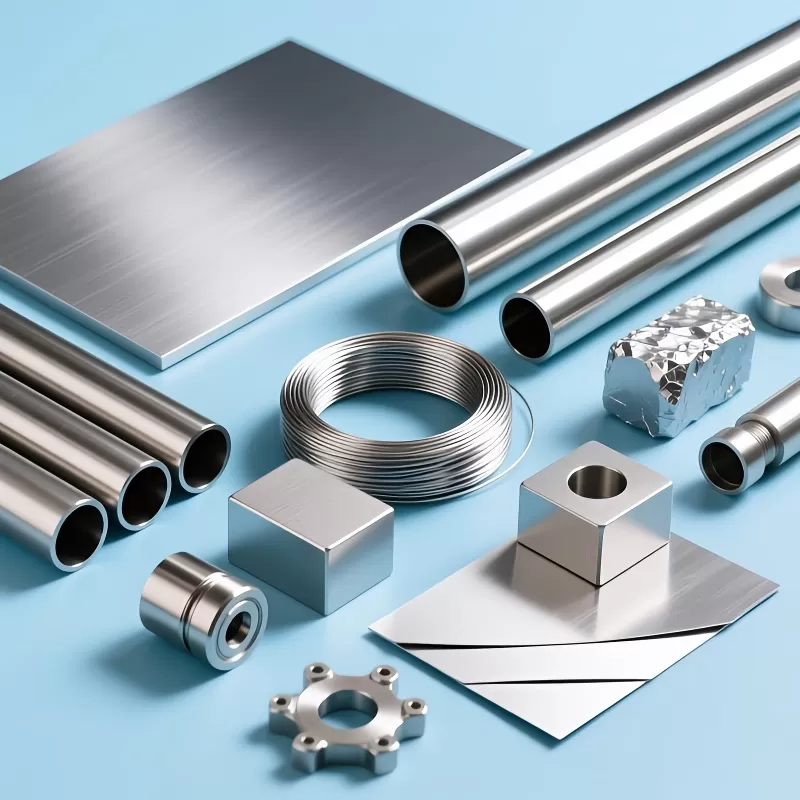
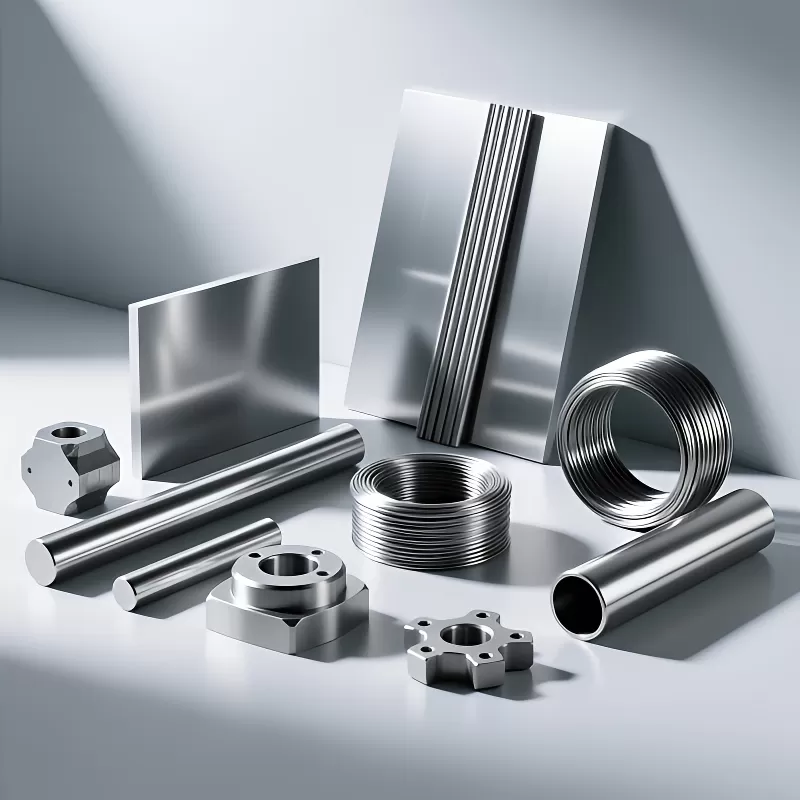
Alloy 27,Glass sealing 27 Alloy,is available in Bar (Round bar, Flat bar), Ribbon, Wire, Rods, Tube, Pipe, Foil, Plate, Sheet, Strip and Forging Stock.
Please contact us if you need customized services. We will contact you with the price and availability in 24 hours.
### **Alloy 27 (Kovar® / Glass Sealing 27) - Product Introduction**
**Overview**
**Alloy 27**, more commonly known by its trade name **Kovar®** and as a **Glass Sealing Alloy**, is a nickel-cobalt-ferrous alloy specifically engineered for its controlled thermal expansion properties. Its primary and most critical characteristic is its **Coefficient of Thermal Expansion (CTE)**, which is carefully matched to that of certain hard glasses (such as borosilicate glass) and alumina ceramics over a wide temperature range.
This matching ensures a reliable, strong, and vacuum-tight seal between the metal and the glass/ceramic when they are fused together, as both components expand and contract at nearly identical rates during heating and cooling cycles. This prevents the formation of destructive thermal stresses that would otherwise crack the glass. It is a fundamental material in the electronics, aerospace, and lighting industries.
---
#### **1. Chemical Composition**
The chemical composition (in weight %) is precisely controlled to achieve the desired thermal expansion match.
| Element | Content (%) | Role & Benefit |
| :--- | :--- | :--- |
| **Iron (Fe)** | Balance | The base element of the alloy. |
| **Nickel (Ni)** | 27.0 - 29.0 | The primary element controlling the thermal expansion coefficient. A content of ~29% gives the lowest CTE in the Fe-Ni system. |
| **Cobalt (Co)** | 16.8 - 17.8 | Added to suppress the transformation of the austenitic phase to martensite, which would cause a disruptive volume change, thereby stabilizing the low CTE. |
| **Manganese (Mn)** | 0.20 - 0.50 | Aids in deoxidation during melting and improves hot workability. |
| **Silicon (Si)** | 0.15 - 0.30 | Acts as a deoxidizer and improves the fluidity of the molten alloy for better casting. |
| **Carbon (C)** | ≤ 0.03 | Kept at a very low level to prevent the formation of carbides which could embrittle the alloy and interfere with the seal. |
| **Chromium (Cr)** | ≤ 0.20 | A controlled impurity. |
| **Sulfur (S)** | ≤ 0.020 | Impurity element, controlled to a very low level to improve hot workability. |
| **Phosphorus (P)** | ≤ 0.020 | Impurity element, controlled to prevent embrittlement. |
*Note: "Kovar" is a registered trademark of a number of companies, including Carpenter Technology Corporation and VDM Metals. The generic name is often "Glass Sealing 27" or "ASTM F15 Alloy".*
---
#### **2. Physical Properties**
The physical properties are dominated by the alloy's thermal expansion behavior.
| Property | Typical Value |
| :--- | :--- |
| **Density** | 8.36 g/cm³ (0.302 lb/in³) |
| **Melting Point** | ~1450 °C (2640 °F) |
| **Specific Heat (20°C)** | 515 J/kg·K |
| **Thermal Conductivity** | 17.3 W/m·K (at 20°C) |
| **Mean Coefficient of Thermal Expansion (CTE)** | **~5.3 x 10⁻⁶/°C (20-400°C)**
**~9.7 x 10⁻⁶/°C (20-500°C)**
*This closely matches borosilicate glass (e.g., Pyrex) and alumina ceramics.* |
| **Curie Temperature** | ~435 °C (815 °F) |
| **Electrical Resistivity** | 0.49 μΩ·m |
| **Modulus of Elasticity (Tensile)** | 138 GPa (20 x 10⁶ psi) |
| **Magnetic Permeability** | It is magnetic at room temperature. |
---
#### **3. Mechanical Properties (Typical for Annealed Condition)**
Alloy 27 has moderate strength, with its value derived from its functional properties rather than high mechanical performance.
| Property | Room Temperature Value |
| :--- | :--- |
| **Tensile Strength** | 517 - 585 MPa (75 - 85 ksi) |
| **Yield Strength (0.2% Offset)** | 345 MPa (50 ksi) min. |
| **Elongation (in 2 inches / 50mm)** | 30% min. |
| **Hardness (Rockwell B)** | 65 - 85 HRB |
---
#### **4. Product Applications**
The application of Alloy 27 is almost exclusively focused on creating hermetic seals.
* **Electronics & Semiconductors:**
* **Transistor and IC Packages:** TO-headers, DIP (Dual In-line Package) lids and bases.
* **Microwave and RF Packages:** Feedthrough terminals and coaxial connectors in microwave tubes and power transistors.
* **Laser Diodes and Optoelectronic Housings.**
* **Aerospace and Defense:** Hermetically sealed connectors and packages for avionics and military systems.
* **Lighting Industry:** Lead-in wires for halogen and high-power incandescent lamps.
* **Vacuum Tubes and Systems:** Terminals and feedthroughs for maintaining a vacuum seal.
* **Energy and Automotive:** Seals for sensors, batteries, and other critical electronic components.
---
#### **5. International Standards**
Alloy 27 is covered by several precise international and industry-specific standards.
| Region/Standard | Specification Number & Name |
| :--- | :--- |
| **ASTM (International)** | **ASTM F15** - Specification for Iron-Nickel-Cobalt Sealing Alloy |
| **UNS (Unified Numbering System)** | **UNS K94610** |
| **Military Standard (USA)** | **MIL-I-23011** - Alloy, Iron-Nickel-Cobalt Sealing, 53Fe-29Ni-17Co |
| **Japanese Industrial Standard** | **JIS C2531** - Japanese Industrial Standard for Iron-Nickel-Cobalt sealing alloy |
| **European Designation** | Often referred to by its composition, e.g., **FeNi29Co17** |
---
**Summary**
**Alloy 27 (Kovar® / Glass Sealing 27 / UNS K94610)** is a specialized functional alloy whose value is defined by its physical property—a thermal expansion coefficient meticulously matched to hard glass and ceramics—rather than its mechanical strength or corrosion resistance. This unique characteristic makes it an indispensable engineering material for creating reliable, vacuum-tight, and stress-free hermetic seals in a vast array of electronic, aerospace, and lighting components. Governed by precise standards like ASTM F15, it remains the benchmark material for metal-to-ceramic and metal-to-glass sealing technology.
Packing of
Standard Packing:
Typical bulk packaging includes palletized plastic 5 gallon/25 kg. pails, fiber and steel drums to 1 ton super sacks in full container (FCL) or truck load (T/L) quantities. Research and sample quantities and hygroscopic, oxidizing or other air sensitive materials may be packaged under argon or vacuum. Solutions are packaged in polypropylene, plastic or glass jars up to palletized 1708 gallon liquid totes Special package is available on request.